(Our crospondant)
TOKYO: The fury of nature in the northern part of Japan shows no signs of relenting. Even before the wounds from the severe earthquake on Monday night could heal, another powerful quake shook the Hokkaido and Aomori regions within just 48 hours. This earthquake, measuring 6.5 on the Richter scale, has caused widespread panic among local residents, once again raising the specter of a tsunami. Although the tsunami warning was later withdrawn, the administration remains on high alert.
Earthquake Epicenter and Intensity
According to the Japan Meteorological Agency (JMA), the epicenter of this new earthquake was located approximately 80 kilometers off the coast of Aomori Prefecture and at a depth of about 54 kilometers below the surface. The tremor was so strong that it was recorded above ‘Shindo-6’ on the Japanese seismic intensity scale in the city of Hachinohe.

Experts state that a Shindo-6 level tremor is extremely dangerous. During such a quake:
- It becomes difficult to stand.
- Heavy furniture moves from its place or topples over.
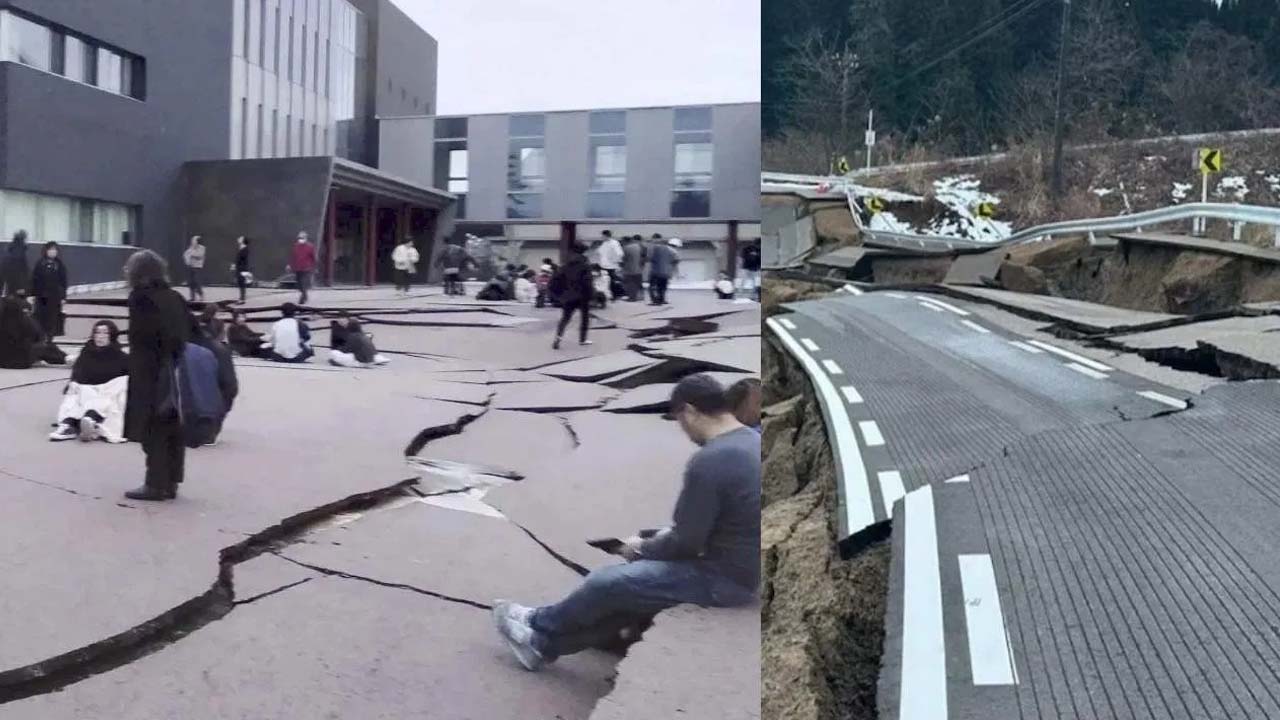
- Cracks can appear in walls and roads.
Tsunami Warning and Evacuation Orders for 90,000 People
Coastal areas have been vulnerable since the 7.6 magnitude earthquake struck on Monday. Immediately following the latest tremors, a Tsunami Warning was issued for the coastal districts of Hokkaido, Aomori, and Iwate. The Meteorological Department had anticipated waves reaching up to 3 meters in height.
As a precaution, the administration immediately advised approximately 90,000 people to leave their homes and move to safe, elevated locations. However, after a few hours, when the sea level did not rise significantly above normal, the warning was downgraded to a ‘Tsunami Advisory’. Despite this, people have been given strict instructions to stay away from the coastline.
Life Disrupted: 30 Injured and Cities in Darkness
According to media reports, at least 30 people have been reported injured in this disaster so far. However, the relief is that no fatalities have been officially confirmed yet.
The impact of the earthquake was clearly visible on the infrastructure:
Power Outages: Electricity has been cut off for thousands of homes, forcing residents to live without heating in the biting cold.
Transport Halted: Several train services, especially the Bullet Train (Shinkansen), were temporarily suspended for safety checks.
Road Damage: Reports of roads sinking and cracking have come from several locations.
Prime Minister’s Appeal and Future Concerns
Considering the gravity of the situation, Japan’s Prime Minister Sana Takaichi has appealed to the nation. She stated, “We are going through a difficult time. I request all citizens to follow the instructions issued by the local administration and the Meteorological Department. Move to safe places in any emergency and do not pay attention to rumors.”
The JMA has warned that more Aftershocks are likely in the coming days. Based on past experiences, the possibility of tremors of the same or greater intensity over the next week cannot be ruled out.
The Threat of the ‘Ring of Fire’
Geographically, Japan is located in the “Ring of Fire” region of the Pacific Ocean, which is the world’s most seismically active zone. The devastating earthquake and tsunami that occurred in this area in 2011 claimed thousands of lives. This is why the administration does not want to take any risks this time, and rescue operations are underway on a war footing.